
Introduction
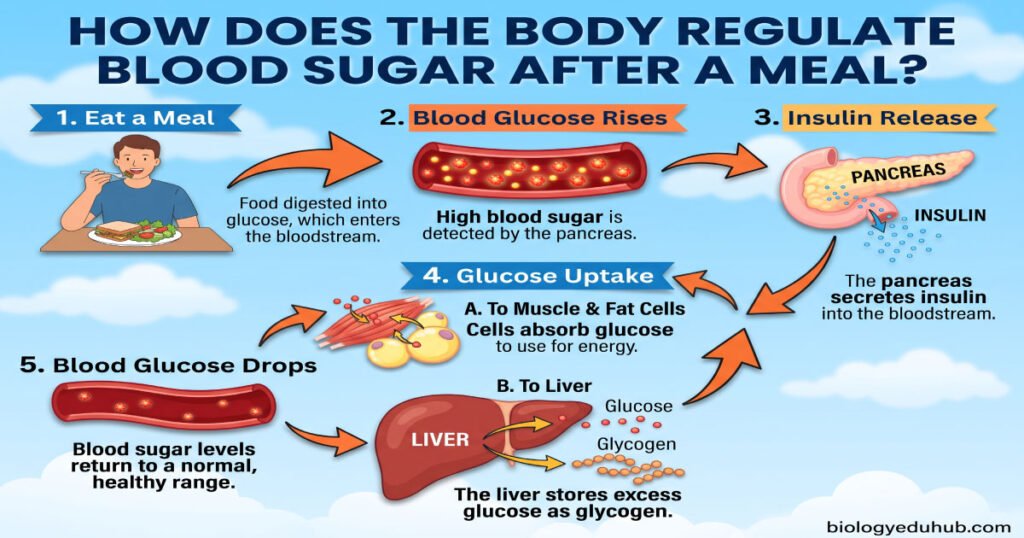
Blood sugar, also known as blood glucose, is one of the body’s primary sources of energy. After eating a meal, carbohydrates in foods such as bread, rice, fruits, potatoes, and pasta are broken down into sugars, mainly glucose, which enters the bloodstream. As blood glucose levels rise, the body activates a sophisticated hormonal and metabolic system to keep blood sugar within a healthy range. This process is essential for providing energy to cells while preventing excessively high or low glucose levels.
The pancreas, insulin, liver, muscles, and other tissues work together to regulate blood sugar after a meal. This coordinated process helps the body use glucose for immediate energy, store excess glucose for later use, and maintain metabolic balance. Understanding how the body regulates blood sugar after eating provides important insight into human physiology, metabolism, and diabetes prevention and management.
1. What Happens to Blood Sugar After Eating?
When a person eats a meal containing carbohydrates, the digestive system begins breaking down these carbohydrates into simple sugars. Enzymes in the mouth and small intestine help convert complex carbohydrates into smaller molecules, including glucose. Glucose is then absorbed through the intestinal lining into the bloodstream.
As glucose enters the circulation, blood sugar levels increase. The amount and speed of this increase depend on several factors, including the type of food consumed, portion size, fiber content, meal composition, and individual metabolic health.
The rise in blood glucose signals the pancreas, particularly the beta cells located in the pancreatic islets, to release insulin. Insulin is the primary hormone responsible for helping the body manage the increased glucose availability after a meal.
The body does not simply allow glucose to accumulate in the bloodstream. Instead, it activates several mechanisms to transport glucose into cells, store it, and reduce the production of additional glucose by the liver.
2. The Pancreas Releases Insulin
Insulin is the central hormone involved in reducing elevated blood glucose levels after eating.
When glucose levels rise following a meal, pancreatic beta cells detect the increase and respond by releasing insulin into the bloodstream. This response involves glucose metabolism within beta cells, changes in ATP-sensitive potassium channels, membrane depolarization, calcium entry, and insulin-containing granule release.
Insulin secretion helps the body manage the incoming glucose in several ways:
- Promotes glucose uptake: Insulin stimulates glucose uptake into skeletal muscle and adipose tissue, particularly by increasing the movement of GLUT4 glucose transporters to the cell membrane.
- Encourages glucose storage: Insulin promotes glycogen synthesis in the liver and skeletal muscles.
- Suppresses glucose production: Insulin reduces hepatic glucose production, helping prevent the liver from releasing excessive glucose into the bloodstream.
- Supports fat storage: When energy is available in excess, insulin promotes lipid synthesis and storage while inhibiting fat breakdown.
These actions help restore blood glucose levels toward their normal range following a meal.
3. How Muscles and Fat Cells Absorb Glucose
Skeletal muscles and adipose tissue play important roles in post-meal glucose regulation. In response to insulin, these tissues increase glucose uptake through the activation and movement of GLUT4 transporters to their cell membranes.
In skeletal muscle, absorbed glucose can be used immediately to generate ATP, the energy currency of cells, or stored as glycogen. Muscle glycogen serves as an important energy reserve for physical activity and other metabolic demands.
Adipose tissue, or body fat, also takes up glucose in response to insulin. Glucose can be used in metabolic processes that support fat storage, including the formation of triglycerides. Insulin also inhibits lipolysis, which is the breakdown of stored fat into fatty acids.
Together, these mechanisms help reduce the amount of glucose circulating in the blood after a meal.
4. The Liver Stores Glucose and Reduces Glucose Production
The liver is one of the most important organs involved in blood glucose regulation. After a meal, the liver responds to insulin and glucose availability by storing glucose and reducing the amount of glucose it releases into the bloodstream.
One major process is glycogenesis, which converts glucose into glycogen, a storage form of glucose. The liver stores glycogen and can later break it down when blood sugar levels decline, such as between meals or during overnight fasting.
After eating, insulin also suppresses two important processes:
- Glycogenolysis: The breakdown of stored glycogen into glucose.
- Gluconeogenesis: The production of new glucose from non-carbohydrate sources, such as lactate, glycerol, and certain amino acids.
By reducing these processes, the liver decreases its contribution to circulating glucose when dietary glucose is becoming available.
The liver therefore acts as a metabolic buffer, helping prevent excessive increases in blood glucose after meals and supporting glucose availability during fasting.
5. The Role of Gut Hormones in Blood Sugar Regulation
The digestive tract also contributes to blood glucose regulation through hormones called incretins. Two major incretin hormones are GLP-1 (glucagon-like peptide-1) and GIP (glucose-dependent insulinotropic polypeptide).
These hormones are released by intestinal cells in response to nutrients entering the digestive tract.
- GLP-1: Enhances glucose-dependent insulin secretion, suppresses glucagon secretion when glucose is elevated, slows gastric emptying, and contributes to satiety.
- GIP: Enhances glucose-dependent insulin secretion and helps coordinate the body’s response to nutrients.
The incretin effect explains why oral glucose generally stimulates greater insulin secretion than intravenous glucose when blood glucose concentrations are matched.
These gastrointestinal hormones work alongside pancreatic insulin and other metabolic signals to help control post-meal glucose levels. Diabetes Journals
6. How Glucagon Helps Maintain Blood Sugar Balance
Glucagon is another important pancreatic hormone, produced by alpha cells in the pancreatic islets. While insulin generally promotes glucose storage and utilization, glucagon helps maintain blood glucose levels, especially during fasting and between meals.
After a carbohydrate-rich meal, insulin secretion increases, and glucagon secretion is generally reduced, although glucagon responses can vary depending on meal composition, particularly protein intake.
Reduced glucagon signaling to the liver helps decrease hepatic glucose production. This is important because the liver should not continue releasing large amounts of glucose into the bloodstream when glucose from a meal is already being absorbed.
As blood glucose levels decline after the meal is processed, glucagon helps the liver release glucose when needed to support the body’s energy requirements.
Insulin and glucagon therefore function as complementary hormones in maintaining glucose homeostasis.
7. When Does Blood Sugar Return Toward Normal After a Meal?
In people without diabetes, blood glucose typically rises after eating and gradually declines as glucose is absorbed, utilized, and stored. The timing and magnitude of this response vary depending on the meal, physical activity, insulin sensitivity, and individual metabolic characteristics.
Meals containing refined carbohydrates may produce a relatively rapid rise in glucose, whereas meals containing fiber, protein, fat, and minimally processed carbohydrates may influence the speed of digestion and glucose absorption.
Physical activity also affects blood glucose regulation. Contracting muscles can increase glucose uptake through mechanisms that partly operate independently of insulin. This is one reason walking or exercising after a meal can help improve glucose management.
However, blood glucose responses are not identical in everyone. Individuals with insulin resistance, prediabetes, or diabetes may experience higher or more prolonged post-meal glucose elevations because insulin secretion, insulin action, or both may be impaired.
Conclusion
The body regulates blood sugar after a meal through a coordinated process involving the digestive system, pancreas, liver, skeletal muscles, adipose tissue, and gastrointestinal hormones. As carbohydrates are digested and glucose enters the bloodstream, pancreatic beta cells release insulin. Insulin promotes glucose uptake into muscle and adipose tissue, encourages glycogen storage in the liver and muscles, and suppresses excessive glucose production by the liver.
Gut hormones such as GLP-1 and GIP further enhance insulin secretion, while glucagon helps maintain glucose availability when blood sugar levels decline. These interconnected mechanisms work together to maintain glucose homeostasis and provide energy to cells throughout the body.
Understanding how the body regulates blood sugar after eating is fundamental to learning about human metabolism, healthy eating, insulin function, and metabolic disorders such as type 2 diabetes.
SEO Information
- SEO title: How Does the Body Regulate Blood Sugar After a Meal?
- Focus keyword: How does the body regulate blood sugar after a meal
- Secondary keywords: Blood sugar regulation after eating, insulin and blood glucose, how insulin works after a meal, glucose metabolism, blood sugar homeostasis, post-meal blood sugar
- Meta description: Learn how the body regulates blood sugar after a meal through insulin, glucagon, the liver, muscles, and gut hormones to maintain glucose homeostasis.
- Suggested URL slug:
how-body-regulates-blood-sugar-after-meal
References
- Holst JJ. Roles of the Gut in Glucose Homeostasis. Diabetes Care. 2016;39(6):884–892. Read the scientific review.
- American Diabetes Association. Standards of Care in Diabetes. American Diabetes Association.
- National Institute of Diabetes and Digestive and Kidney Diseases (NIDDK). National Institute of Diabetes and Digestive and Kidney Diseases.
